When people think about a water filter, they often assume all systems work the same way. In reality, there are major differences in how filtration systems treat water and those differences directly impact water quality, taste, maintenance, and long-term system performance. Most commercial drinking water filtration systems fall into two categories: bypass filters and non-bypass filters.
Bypass Filters Allow Water to Be Dispensed Without Full Purification
Bypass filters are designed so water can still be dispensed even if it has not been fully purified. We often see this occur when a water filter has reached its lifespan and has not been replaced. In many of our competitor systems, water is able to flow around the filter or bypass the purification process altogether.
This is similar to a car with a worn-out oil filter still circulating oil through the engine, except instead of trapping contaminants effectively, the system allows less-than-clean fluid to keep moving through the process.
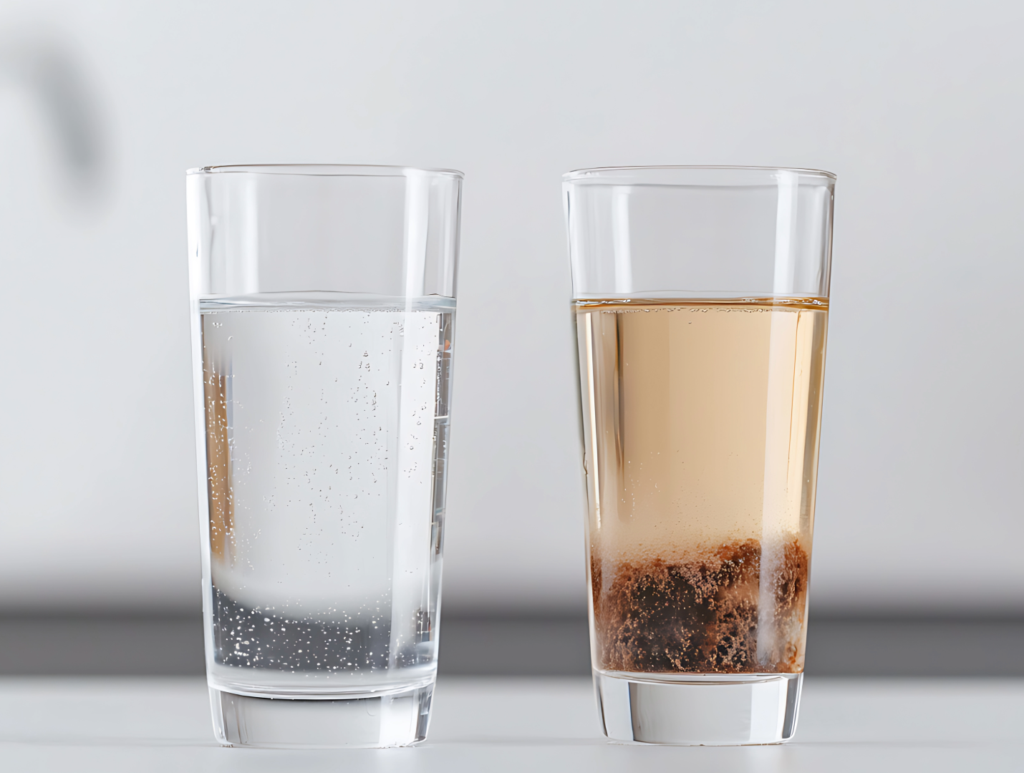
While these systems may improve taste or reduce some contaminants, they can still allow unfiltered or partially filtered water to reach the end user. The result? Inconsistent water quality and the potential for dispensing both dirty and clean drinking water.
That means your employees, customers, or patients could still be drinking water that contains:
- Dissolved solids
- Heavy metals
- PFAS (“forever chemicals”)
- Bacteria and microscopic contaminants
Many businesses assume that because a system has a filter, the water is fully purified, but that is not always the case with bypass-style filtration systems.
Non-Bypass Filters Ensure Every Drop Is Purified
Non-bypass filtration systems are designed so that every drop of water must pass directly through the purification process before being dispensed. One of the best examples is our 5-step filtration process with reverse osmosis (RO).
Our 5- step filtration process with RO uses an ultra-fine membrane that blocks contaminants and separates impurities from clean drinking water. Contaminants are removed instead of remaining in the water supply.
Non-bypass systems can eliminate:
- Dissolved solids
- Lead and heavy metals
- PFAS
- Chlorine
- Microscopic contaminants
Because all water is forced through the filtration process, businesses receive more consistent water quality and cleaner-tasting water.
Built-In Service and Filter Replacement Support
Another key advantage of non-bypass systems, especially through our bottleless water and ice rental program is that they are fully managed water solutions.
With our all-in-one rental fee, everything is included:
- Scheduled filter replacements
- Preventative maintenance and service
- Service and support
- Equipment upkeep to ensure peak performance
This removes the burden from your team of tracking filter life, ordering replacements, or worrying about system performance over time.
Our systems are also designed with accountability in mind. When a filter reaches its usable lifespan, the system alerts the user and for peace of mind, the system will stop dispensing until the filter is replaced. This ensures the system is never operating beyond its safe or effective filtration capacity.
Unlike bypass systems that may continue dispensing unfiltered water, this safety feature helps ensure your employees, customers, and guests are only drinking clean, delicious-tasting water.a
Why This Matters for Your Business
Providing clean drinking water is about more than convenience, it directly impacts health, trust, and overall workplace experience.
Choosing a non-bypass filtration system helps ensure your team and customers are drinking properly purified water instead of water that simply passes through a basic filter.
At Pure Water Technology of Central PA and Northern MD, we provide advanced bottleless water purification systems with reverse osmosis technology designed to deliver truly purified and simply a better experience.